
That was Carmel by the Sea
- Oct 20, 2023
- 2 min read
Updated: Dec 20, 2025
The memories
The pain
All that used to be rooted in the deep ocean
Now floating in plain sight
I was holding onto everything
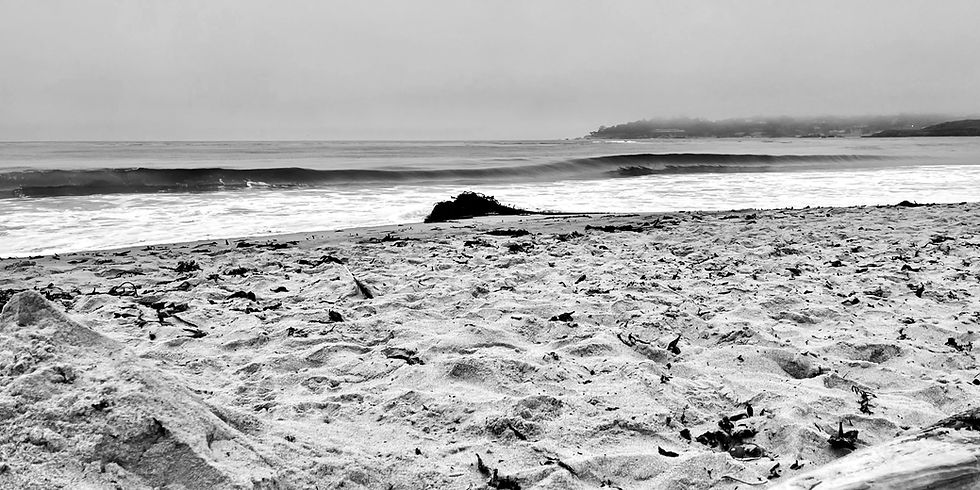
Like the Carmel sea in a cloudy fall
I had let some out
But there was so much left on the horizon
I just didn't want anyone else to witness it
I had to do it alone
I had to let them out alone
I had to do it in the deep night
When nobody was watching
And as the sea was letting it out
So were my nightmares
Eventually. It will all be out
So the flies can enjoy it
There was no sunset today
It was just dimmed
That was it. That was Carmel
Carmel by the Sea
Sometimes a poem finds you as much as you find it. That Was Carmel by the Sea was my attempt to hold the weight of memory, to capture the emotions we cling to, and to explore what it feels like to finally release them.
Burden of Memories
It began with the line, “And I was holding onto it.” I was struck by how we grasp onto our memories, both joyful and painful, much like the sea holds onto seaweed. There’s a heaviness in carrying the past, and writing this poem helped me acknowledge that weight.
The Turbulence of Emotions
Powerful feelings can shift like the Carmel sea in a cloudy fall—sometimes calm, sometimes wild. The poem became a way to illustrate that inner turbulence, the hidden weeds beneath the surface, and the moments when emotions unexpectedly surface.
Releasing the Pain
Letting go is rarely simple. Lines like “I had to do it alone” and “I had to do it in the deep night” remind me that releasing what no longer serves us is often a quiet, personal journey. Growth and healing frequently happen in those unseen, introspective moments.
A Ray of Hope
Even in darkness, there’s resilience. “Eventually. It will all be out / So the flies can enjoy it.” For me, these lines honor the idea that our buried emotions, once released, contribute to a greater sense of clarity and liberation.
When the Light Fades
Not every day is vibrant. “There was no sunset today / It was just dimmed.” Some days are dim, cloudy, or muted—but even then, there’s space for reflection, for gentle growth, and for connecting with ourselves.
Carmel by the Sea reflects a universal human experience: grappling with the past, with our emotions, and with the work of finding release. Writing it reminded me that these journeys, though sometimes solitary, are shared in their essence.
Even on dim days, we can pause, breathe, and honor the process of letting go.


Comments